Life Science & Medical Industry
Engineering the Right Fit for Patients
From patient-specific design to production-ready manufacturing, we help innovators bring safer, smarter medical solutions to life.
A New Path Forward: 3D-Modeling Human Anatomy
Our anatomy is unique, and standard sizing won’t cut it. We need a plan that’s precise and a workflow that won’t slow us down.
Life sciences and medical teams are using 3D solutions to create medical devices and biocompatible products that fit each patient’s unique anatomy — because better fit drives better outcomes.
Here’s how Hawk Ridge Systems can help:
- Meet Regulatory Compliance with Confidence: Rely on our advanced hardware, software, and services that support important items like lot-level traceability and automated documentation, keeping your workflows audit-ready.
- Move Faster with a Connected Ecosystem: Speed up your product development with a data-driven, model-based ecosystem that connects each stage from design to manufacturing, opening doors to new avenues like 3D printing biocompatible materials for unique patient scenarios.
- Evaluate Performance & Patient Safety: Use our advanced simulation software and services to test your designs under various conditions and scenarios, including structural, fluid flow, and electromagnetic analysis.
3D Solutions for Life Sciences & Medical
Putting the patient first from design to manufacturing.
Design Software
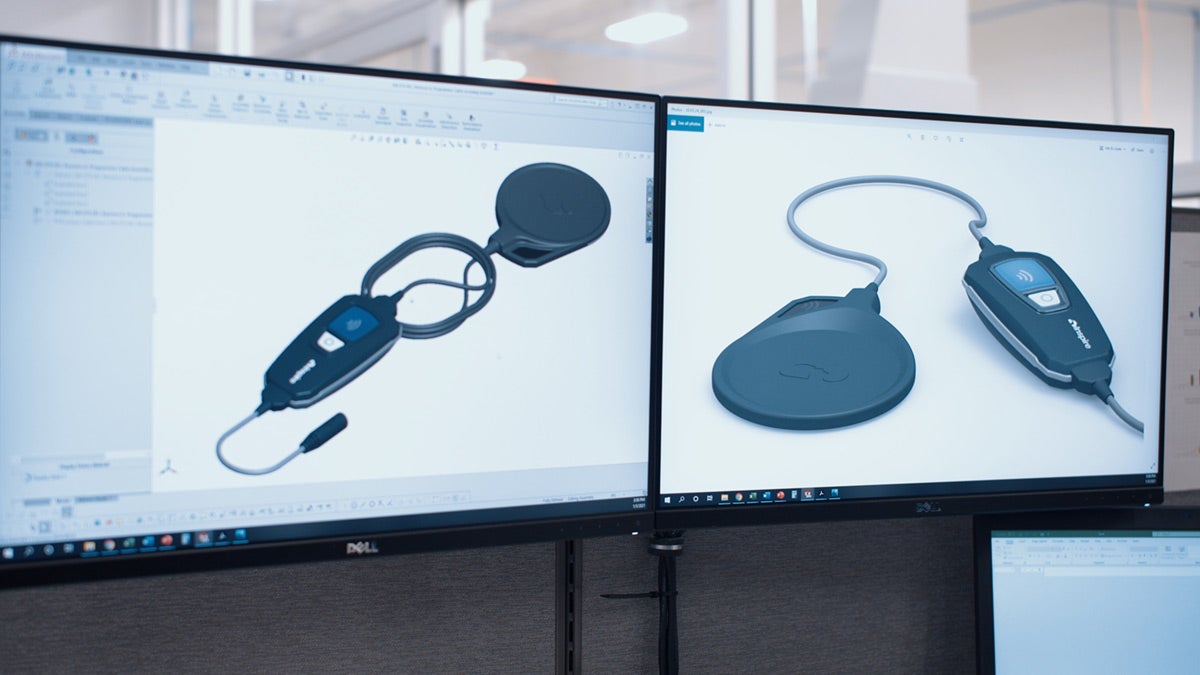
Build accurate medical devices in industry-leading CAD software from sketches or 3D-scanned data.
Simulation Software
Run FEA and CFD analyses to test strength, fit, and performance virtually using advanced simulation tools, so you can catch issues early and reduce risk.
3D Printing
Produce biocompatible parts using professional 3D printing solutions designed specifically to handle medical products.
3D Scanning
Use advanced 3D scanning technologies to convert patient or legacy part data into accurate digital models.
Manufacturing-as-a-Service (MaaS)
Keep production aligned to real-time demand with manufacturing-as-a-service (MaaS) capabilities.
Industry-Leading Technical Support
Get answers fast from engineers who know the realities of healthcare and compliance.
High Tech Software Solutions
Design high-performing, reliable medical devices using tools built for precision and scale.
SOLIDWORKS CAD
Design accurate, reliable medical devices and parts with intuitive parametric tools and a fully integrated ecosystem that gives you full design control and speed to market.
SOLIDWORKS Inspection
Automate First Article Inspection reports to ensure medical parts meet specifications for fit, function, quality, and reliability.
FEA Simulation
Predict fatigue life in joint replacements and validate surgical instruments such as stents and archwires using advanced finite element analysis (FEA) for strength and safety across diverse patient anatomies.
CFD Simulation
Analyze fluid, thermal dynamics, and air flow using computational fluid dynamics (CFD) to optimize lab processes, operating rooms, and respiratory devices like oxygen masks and inhalers.
Electromagnetic Simulation
Use advanced electromagnetic simulation to test wearables, pacemakers, MRI machines, and other medical devices while meeting specific absorbed radiation (SAR) requirements.
PDM/PLM Solutions
Prepare for regulatory compliance and FDA audits with quality product data management (PDM) and product lifecycle management (PLM) tools that keep everything organized and traceable.
CAMWorks
Produce complex components with consistent precision and compliance using a fully integrated design-to-manufacturing workflow that keeps production moving fast.
Manufacturing Solutions for Life Sciences & Healthcare
At Hawk Ridge Systems, we offer more than unparalleled services, training and powerful solutions. We provide our customers with two manufacturing options for their needs: 1) purchasing the best tools for an in-house manufacturing team or 2) working with our experienced manufacturing partner, A3D Manufacturing, to outsource production needs.
A3D Manufacturing is a great option for organizations without in-house manufacturing teams. It is ISO 9001 certified and offers various additive manufacturing techniques, rapid prototyping options, CNC machining, injection molding, cast urethane and post-processing services.
Formlabs 3D Printers
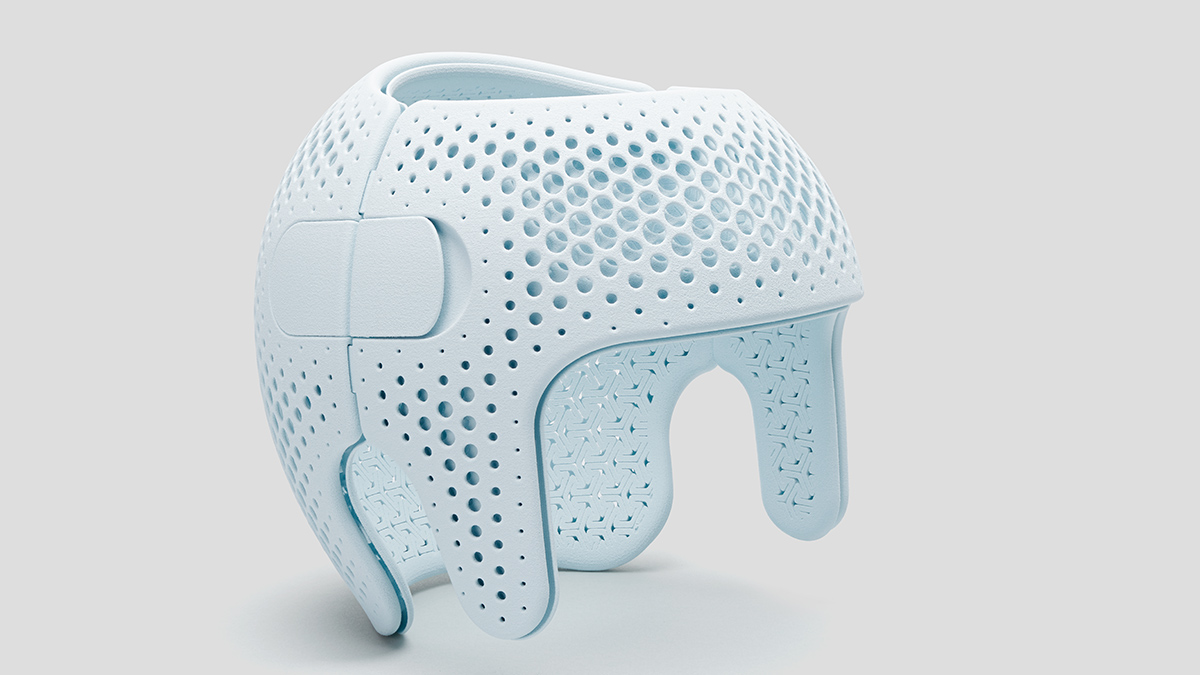
Create patient-safe, biocompatible products — such as orthotics and prosthetics — designed to improve mobility and quality of life.
Markforged 3D Printers
Produce functional medical prototypes and custom prosthetics while speeding up the approval process and time to market.
Stratasys 3D Printers
Scale production with industrial 3D printers that support a range of biocompatible materials and meet FDA requirements.
Artec 3D Scanners
Capture complex anatomical data to create patient-specific implants and surgical guides for better fit and performance.
Healthcare Hardware Solutions
Capture detailed anatomy, prototype medical devices, and create custom implants and surgical guides faster while improving accuracy.

North American Manufacturing,
On Demand
Get high-performance, high-quality parts, fast with local, North American manufacturing services. Manufacturing-as-a-service (Maas) providers offer 3D printing, and traditional manufacturing services so you can optimize costs, speed up production, and manufacture your parts and prototypes sustainably and locally.
With MaaS, you can:
- Optimize manufacturing workflows
- Lower operational costs
- Scale your production to meet demand
Services & Customer Benefits
Technical Support
Our technical support team is comprised of mechanical engineers, electrical engineers, and computing specialists who provide best-in-class on-call support and Ask-an-Expert sessions when you need it the most.
Unmatched Training
We’re one of the largest engineering training providers in the world, offering both online and on-demand training so your team knows how to get the most out of your software.
Professional Services
Our dedicated Services team ensures a swift start with our design solutions, offering complete implementation, onboarding, consulting, and efficient upgrades for new mechanical design software.
Subscription Support
Frequently Asked Questions
Early adopters of 3D printing or additive manufacturing technologies include the pharmaceutical and medical device industries.
Pharma and medicine use additive manufacturing to create products at scale, including anatomical models, surgical guides, prosthetics and implants, and even personalized drugs. They benefit from lighter, easier-to-produce parts at a fraction of the cost while ushering in huge patient advantages — the same features that additive manufacturing brings to other industries, such as automotive and aerospace.
Some of the most important use-cases for medical 3D printing include rapid prototyping, point-of-care solutions, serialization for regulatory compliance and ensuring no disruptions in production will occur like supply chain constraints or issues.
3D-printed medical devices allow for customization, complex geometry, rapid prototyping, reduced waste and innovative design flexibility.
Manually constructed medical devices using traditional manufacturing include issues like limited customization (bad fit and lower performance), complexity restrictions (no capability for complex geometries, which hinders innovation), and labor-intensive processes which result in higher costs and longer production times.
Life sciences and healthcare companies use 3D printers such as the HP Multi Jet Fusion 3D printers (particularly the 5420W for white parts), the Formlabs Fuse 1 selective laser sintering (SLS) 3D printer and Artec 3D Scanners.
Many companies use additive manufacturing to scale up their medical device production process.
Stryker Corporation and Johnson & Johnson, for example, use 3D printing for implants and surgical and patient-specific instruments.
Life sciences companies create anatomical models to improve operating procedures, surgical training and much more, resulting in better patient outcomes and reduced OR (operating room) time.
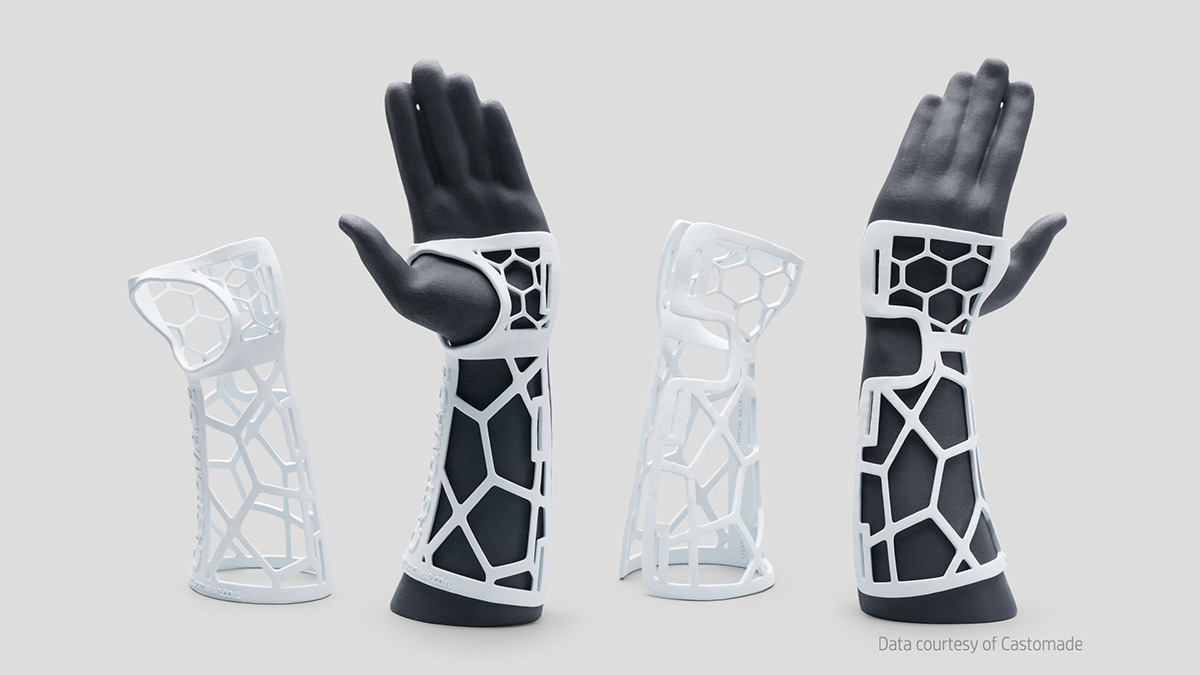
In addition, using additive manufacturing for medical devices like orthotics and prosthetics means customization to fit patients’ specific needs, ways for patients to avoid post-operative bone-graft surgeries, see less interoperative bleeding and, in general, have better patient outcomes.
Another value driver for additive in healthcare is the advent of personalized drugs with unique dosing requirements for specific patient needs.
SOLIDWORKS is the go-to solution used by medical and healthcare companies for mechanical design and simulating how their products will work in the real-world with analysis solutions that help to ensure product safety and optimal performance. They use software like SOLIDWORKS Flow Simulation to optimize fluid delivery (for example, catheters) or improve the thermal performance of medical device products. Finite element analysis solutions, such as SIMULIA Abaqus, are used to validate the performance and safety of medical devices made of hyper elastic materials (for example, stents.)
These tools help reduce design time, errors and communication delays and help create more competitive medical products.
Companies in this industry often implement these tools alongside data management systems like SOLIDWORKS PDM and the 3DEXPERIENCE Platform to set them up for success with compliance and FDA audits.
Using finite element analysis (FEA) and flow simulation software can reduce prototype costs, reduce material waste, optimize and validate the design and shorten the time to get a product on the shelves.
The most important ROI for this type of software is reducing the likelihood of a product recall, which could cost a company billions of dollars if a lawsuit is involved.
Life Sciences & Healthcare
Essential Steps for Successful Medical Device Design
Download Whitepaper
Tips to Optimizing Your Medical Device Workflows
Read Article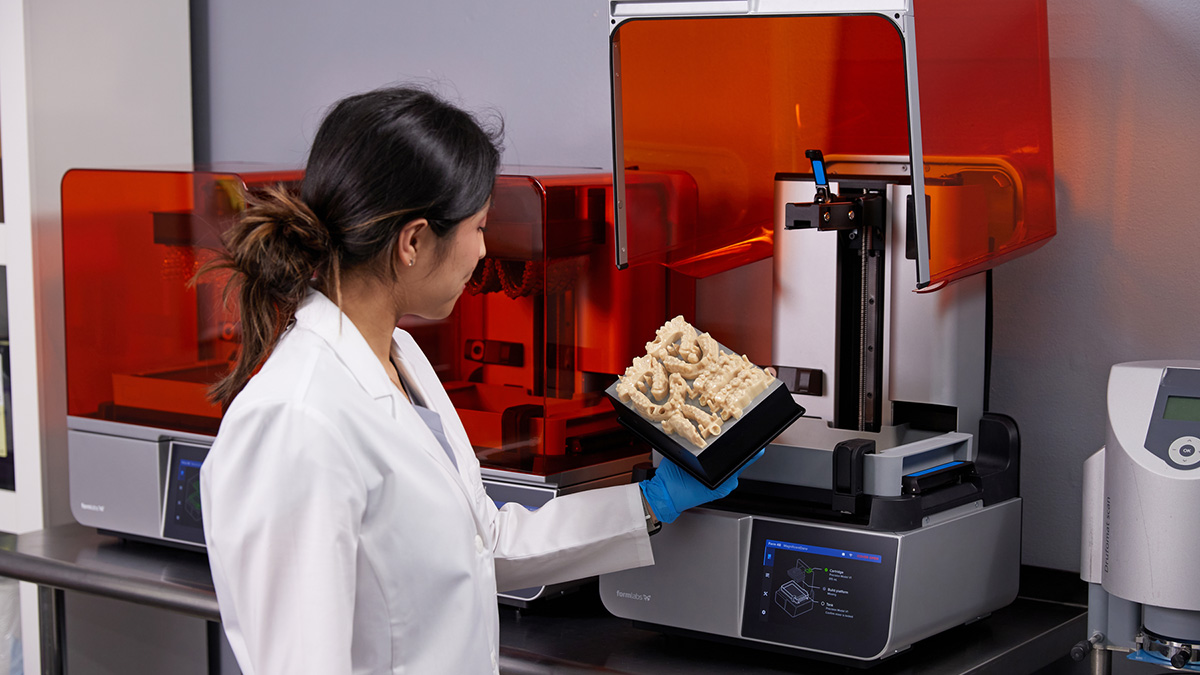
3D Printing Changes the Game for the Medical Industry
Download Whitepaper